- ADDRESS:Jinan City, Shandong Province
- Wanda Plaza, Jinan, Shandong, China
- +8617615809553
- info@deruna.com

Precision-engineered exhaust valve for high-temperature diesel engines – The OEM D30-1003103C Exhaust Valve is manufactured from advanced austenitic steel (Nimonic 80A / equivalent) to withstand extreme exhaust gas temperatures and corrosive combustion byproducts. Designed for SINOTRUK Homan D30 series engines, this valve ensures reliable sealing and consistent valve train operation under the most demanding conditions. For guaranteed compatibility and performance, always choose genuine Sinotruk Homan parts. The D30-1003103C exhaust valve features a hollow stem filled with sodium for active cooling, a hardened tip, and a Stellite-faced valve seat interface, delivering unmatched longevity in heavy-duty applications.
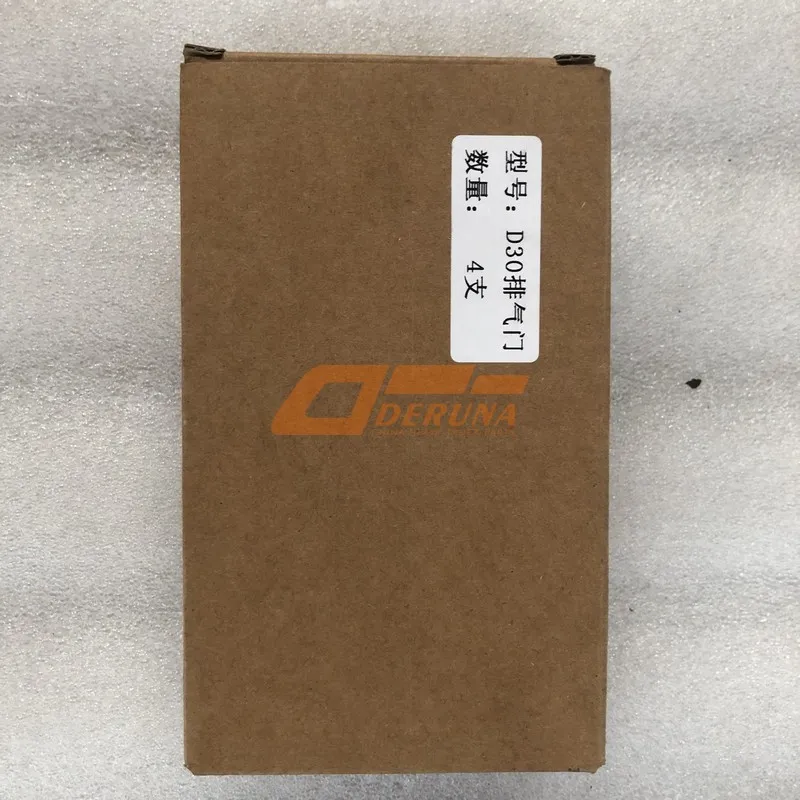
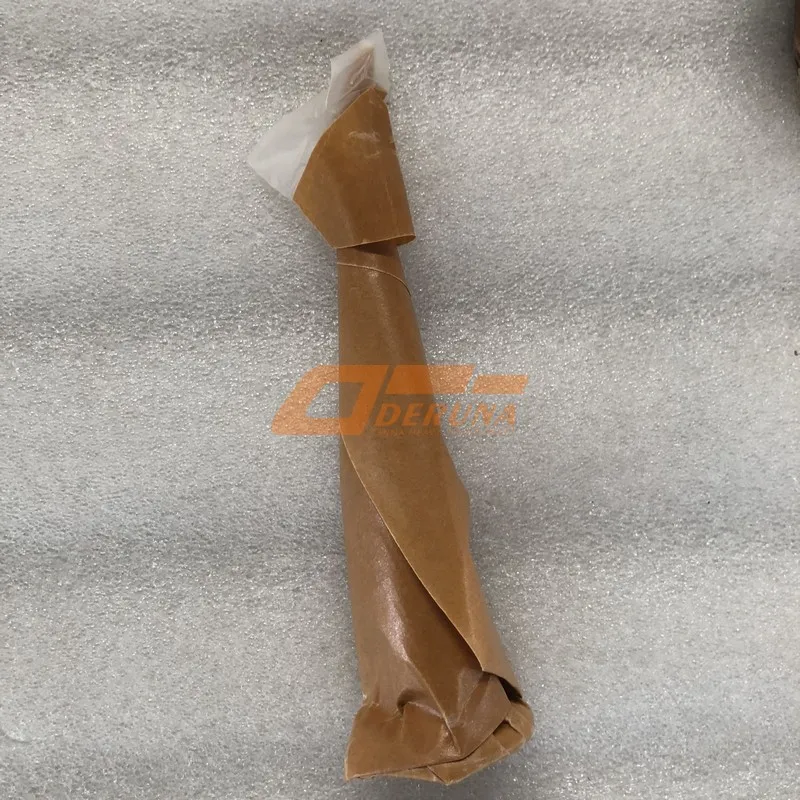
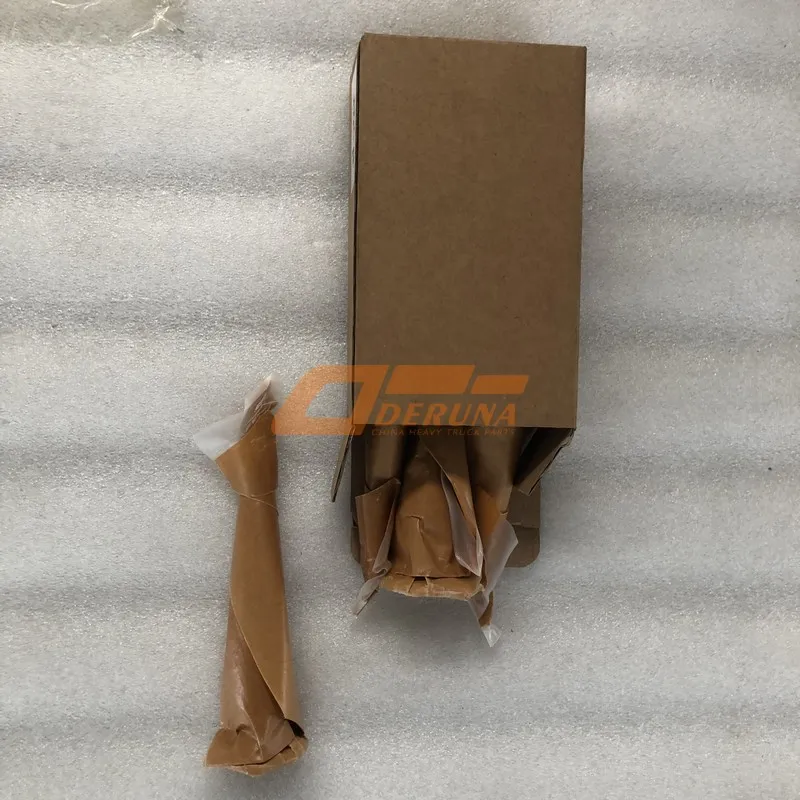
The D30-1003103C exhaust valve is engineered to survive the most punishing environment inside a diesel engine: temperatures exceeding 850°C, corrosive sulfur compounds, and repetitive impact loading. Unlike standard valves that can warp or burn after extended high-load operation, this valve uses a hollow stem partially filled with metallic sodium.
As the valve opens and closes, the sodium melts and sloshes, transferring heat from the valve head to the stem and into the valve guide. This active cooling reduces valve head temperature by up to 100°C, dramatically reducing the risk of fatigue cracks and tuliping. The valve face is hard-faced with Stellite alloy (stellite 6), providing exceptional resistance to wear and high-temperature corrosion.
Hollow stem with sodium fill reduces head temperature by ~100°C, preventing hot spots and extending valve life under continuous heavy load.
Valve face welded with Stellite 6 alloy, hardness 38-42 HRC, resists oxidation, galling, and erosion from high-velocity exhaust gases.
Induction-hardened tip (55-60 HRC) and chrome-plated stem reduce friction and wear against rocker arms or cam followers, maintaining valve lash.
| OEM Number | D30-1003103C |
| Product Name | Exhaust Valve (Diesel Engine) |
| Brand | SINOTRUK Homan |
| Material | Austenitic steel (Nimonic 80A / 21-4N equivalent) with sodium-filled hollow stem |
| Stem Diameter | 7.93 mm – 7.95 mm (chrome plated) |
| Head Diameter | 34.5 mm (fits D30 series engines) |
| Overall Length | 126.2 mm ±0.1 mm |
| Valve Face Angle | 45° with Stellite hardfacing (thickness 1.5mm) |
| Tip Hardness | 55 – 60 HRC (induction hardened, depth 1.2mm) |
| Stem Coating | Hard chrome plated (0.02-0.04mm) + phosphate pre-lube |
| Max Operating Temp. | 950°C (valve head continuous), 600°C stem |
| Sodium Content | 55% – 60% of hollow cavity volume (approx. 3.5 grams) |
| Applicable Engines | SINOTRUK Homan D30 series (D30-1003103 original replacement) |
| Manufacturing Process | Hot forged, CNC machined, sodium filling, Stellite weld deposition, 100% NDT |
| Standards | IATF 16949, ISO 9001, RoHS, SAE J775 |
The D30-1003103C exhaust valve starts as a high-grade austenitic steel bar that is hot-forged to align the grain structure along the valve head and stem. After rough machining, a deep hole is drilled from the stem tip into the valve head, and the cavity is evacuated and back-filled with a precisely measured amount of metallic sodium under an inert atmosphere. The tip is then sealed via friction welding, leaving no seam or leakage path.
The valve face is built up with Stellite 6 via plasma transferred arc (PTA) welding, creating a metallurgically bonded hard layer that resists high-temperature creep and impact. The final grinding operations achieve a surface finish of 0.2Ra on the stem and a concentricity of 0.03mm between the stem, seat, and valve head.
The D30-1003103C utilizes the principle of latent heat of fusion. Sodium has a melting point of 98°C, well below the valve head operating temperature. As the valve head heats up during the exhaust stroke, the sodium inside the hollow chamber melts. When the valve opens and the stem slides upward into the valve guide (cooled by engine coolant), the liquid sodium transfers heat from the red-hot head to the relatively cooler stem.
This cycle repeats each time the valve moves, effectively pumping heat away from the combustion zone. Engineers have measured a temperature reduction of 80–120°C at the valve head center compared to a solid valve of the same geometry. This cooling effect significantly reduces oxidation and prevents the valve margin from burning away.
Exhaust valves are subjected to a corrosive cocktail of hot exhaust gases, unburned fuel, and combustion byproducts that can cause pitting and lead to valve seat recession. The Stellite 6 alloy used on the D30-1003103C contains cobalt, chromium, and tungsten, which form hard carbides. This material maintains its hardness up to 700°C and resists galling against the valve seat insert, which is often also made of Stellite.
Field tests show that the Stellite-faced D30-1003103C valves exhibit less than 0.05mm of recession after 1 million cycles, while non-coated valves can wear up to 0.2mm, causing loss of compression and increased valve lash.
Correct installation of the D30-1003103C is essential to realize its full potential. Follow these steps: 1) Remove the cylinder head and thoroughly clean carbon deposits from the exhaust ports and valve guide bores. 2) Measure valve guide clearance; replace guides if clearance exceeds 0.08mm. 3) Lightly lubricate the valve stem with graphite-based assembly lube or engine oil. 4) Insert the valve into the guide from the combustion chamber side.
5) Install valve spring, retainer, and keepers using a valve spring compressor. 6) After reassembling the cylinder head, perform a solvent leak test: pour diesel fuel or kerosene into the exhaust port – no leakage past the valve seat is allowed. 7) When reinstalling the cylinder head, ensure valve stem tips are within the specified height tolerance. Always use new valve stem seals to prevent oil ingestion.
The D30-1003103C exhaust valve is designed for long life, but periodic inspection during valve lash adjustments (typically every 100,000 km) is recommended. Check for: (a) valve stem tip wear – any visible pitting or cupping requires replacement; (b) valve spring free length and tension; (c) signs of excessive oil burning that may indicate worn valve guides;
(d) if the engine has been overheated, remove the cylinder head and inspect the valve head for cracking (magnesium/fluorescent penetrant). Never reuse a sodium-filled valve if the stem shows any signs of impact damage; a cracked hollow stem can leak sodium, which reacts violently with water – always handle with care and dispose of properly.
Every D30-1003103C exhaust valve is produced in an IATF 16949 certified facility, with full traceability from steel mill to finished part. The manufacturing includes 100% non-destructive testing: (a) eddy current inspection for surface cracks on the stem; (b) fluorescent penetrant inspection for the valve head fillet radius; (c) X-ray inspection of the sodium cavity seal weld for porosity;
(d) frequency analysis of each valve to verify structural integrity. Destructive tests are performed on sample units from each batch: metallographic examination of grain flow, microhardness profiling of the Stellite layer, and hot fatigue testing (500 thermal cycles from 200°C to 950°C while cyclically loaded). The valves meet or exceed SAE J775 and DIN 73402 standards.
A large European logistics company with 450 D30-powered heavy trucks replaced all exhaust valves with the D30-1003103C. Over two years and average 600,000 km per vehicle, they reported zero exhaust valve failures, compared to a 7% failure rate previously with aftermarket valves. The reduced downtime saved an estimated €2,000 per truck annually. In another example, a mining fleet in South Africa using D30 engines for haul trucks noted that the sodium-filled D30-1003103C valves maintained consistent compression across all cylinders after 15,000 hours of extreme dust and heat, eliminating valve burning issues that plagued other brands.
Each genuine D30-1003103C exhaust valve is individually packed in a sealed anti-corrosion bag with protective plastic caps on the stem tip. The package includes a holographic label with a unique QR code and serial number. Scanning the QR code opens the SINOTRUK Homan verification portal, confirming the valve’s authenticity and batch information. The valve itself is laser-etched with “SINOTRUK Homan” and the OEM number on the valve head. Counterfeit valves often lack sodium filling (they are solid), have no Stellite hardfacing, and use inferior steel that burns or cracks quickly. Always purchase from authorized SINOTRUK Homan distributors to guarantee genuine D30-1003103C quality and safety.
Summary: The SINOTRUK Homan Exhaust Valve (OEM D30-1003103C) delivers active sodium cooling, Stellite hardfacing, and extreme heat resistance for D30 diesel engines. Upgrade to genuine OEM for maximum durability and engine protection.
If you have any questions about our products, services, or anything related to what we offer, please don’t hesitate to leave us a message—our dedicated team is always ready to provide prompt and helpful responses to address your concerns. What’s more, when you become our valued customer, we’re delighted to offer you complimentary catalog services, giving you access to detailed, up-to-date information on our full range of products, specifications, and offerings to help you make informed decisions.