- ADDRESS:Jinan City, Shandong Province
- Wanda Plaza, Jinan, Shandong, China
- +8617615809553
- info@deruna.com

In the critical safety system of a heavy-duty truck, the integrity of every hydraulic component is paramount. The genuine BREAK HOSE01 Break Hose Pipe is a precision-engineered, flexible hydraulic line designed by SANY to ensure reliable and immediate transmission of brake fluid pressure from the chassis frame to the wheel brake assemblies. As a vital safety component within the comprehensive catalog of authentic SANY parts, this hose is subjected to rigorous testing to withstand extreme pressures, temperature fluctuations, and constant vibration.
The BREAK HOSE01 facilitates the precise movement needed between the truck’s frame and the axle-mounted brakes, ensuring that the driver’s pedal command translates directly into effective stopping power. Choosing the OEM part BREAK HOSE01 is a non-negotiable investment in vehicle safety, providing the durability and reliability required to maintain consistent brake system pressure and prevent catastrophic failure.
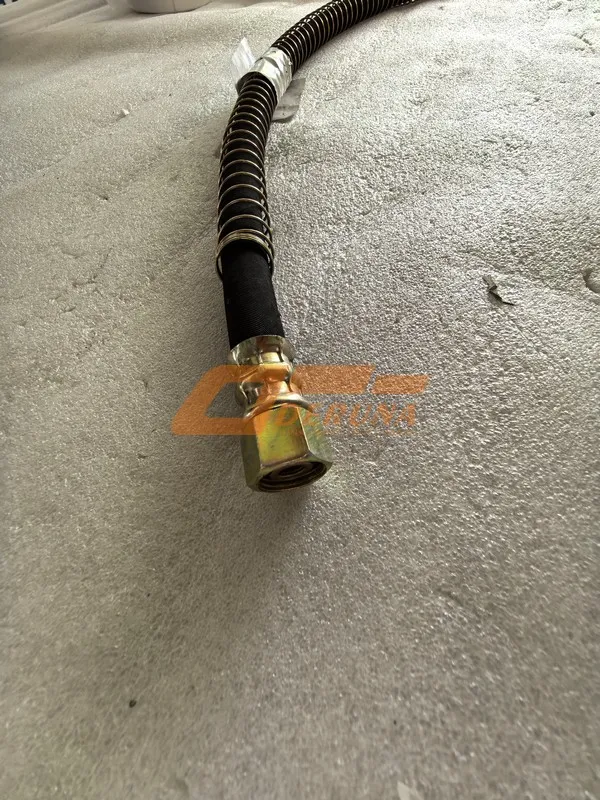
Break Hose Pipe
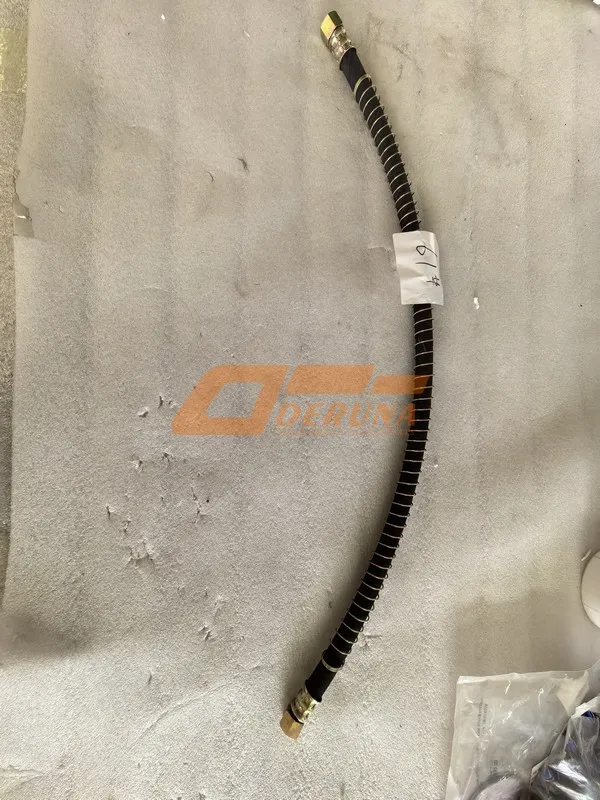
Тормозной шланг
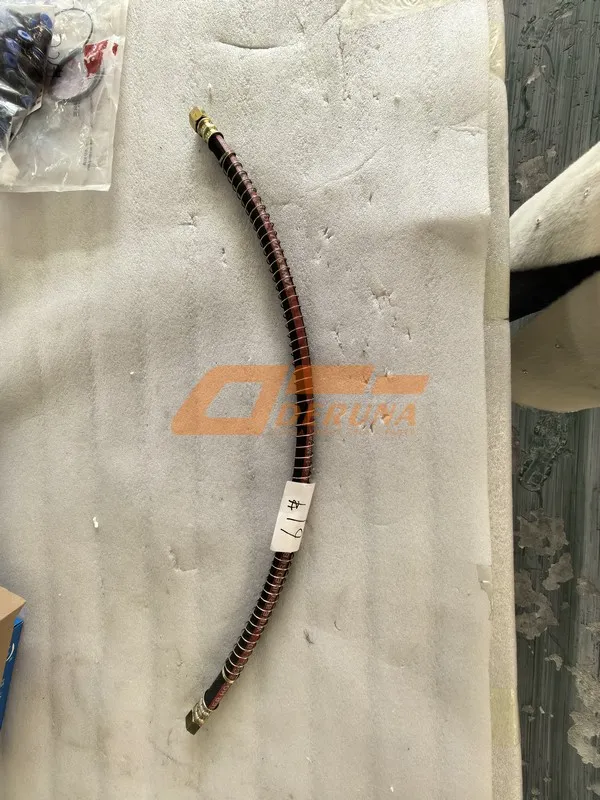
Manguera de Freno
The SANY Break Hose Pipe, part number BREAK HOSE01, serves as a critical flexible link within the truck’s hydraulic brake system. It connects the rigid metal brake lines mounted on the vehicle’s chassis to the brake calipers or wheel cylinders located on the steering knuckle or axle assembly.
This flexible connection is absolutely necessary to accommodate the relative movement between the chassis and the suspension components during steering, cornering, and when traversing uneven terrain. The BREAK HOSE01 must transmit full hydraulic pressure from the master cylinder to the brake actuator without any expansion, delay, or leakage.
The performance of this hose directly impacts brake feel and effectiveness. A high-quality hose like the BREAK HOSE01 maintains a constant internal diameter and uses a reinforced construction to prevent swelling under pressure. This ensures a firm, responsive brake pedal and consistent brake application.
If the hose degrades and begins to bulge internally, it acts like a weak spring in the system, causing a spongy pedal feel and reduced braking force. In the worst case, a ruptured hose leads to a complete and instantaneous loss of brake pressure on that circuit, creating a severe safety hazard. Therefore, the integrity of the BREAK HOSE01 is a cornerstone of reliable braking performance.
The genuine BREAK HOSE01 is not a simple rubber tube; it is a sophisticated, multi-layered assembly engineered for maximum safety and longevity. The innermost layer is a tube made from a special synthetic rubber compound, typically EPDM (Ethylene Propylene Diene Monomer), chosen for its exceptional compatibility with modern DOT 3, DOT 4, and DOT 5.1 brake fluids. This tube is designed to be non-porous and resistant to fluid degradation, preventing internal swelling and ensuring consistent fluid flow.
The table below provides the key technical specifications for the SANY Break Hose Pipe. This data is essential for verifying the correct replacement part and ensuring it meets the performance requirements of your vehicle’s specific braking system.
| Parameter | Specification |
|---|---|
| OEM Part Number | BREAK HOSE01 |
| Product Name | Break Hose Pipe |
| Brand | SANY |
| Hose Type | Flexible Hydraulic Brake Hose |
| Inner Tube Material | EPDM Rubber (Compatible with DOT 3/4/5.1) |
| Reinforcement | High-Tensile Textile or Steel Braid |
| Minimum Burst Pressure | Exceeds DOT Requirements (Typically > 8,000 PSI) |
| Fitting Material | Steel, Zinc Plated |
| Primary Application | SANY Truck Front/Rear Axle Brake Connections |
Replacing a brake hose is a safety-critical procedure that must be performed with care. Always use the correct replacement part, the genuine BREAK HOSE01. Begin by safely lifting and supporting the vehicle. Clean the area around the existing hose fittings. Using a line wrench (flare nut wrench) to prevent rounding, loosen the fittings at both the chassis hard line and the brake caliper or wheel cylinder. Remove the old hose and any supporting clips or brackets.
Install the new hose, starting by hand-threading the fittings to avoid cross-threading. Use the line wrench to tighten the fittings to the manufacturer’s specified torque. Do not over-tighten, as this can damage the fittings or the hose ends. Secure the hose in its factory routing clips to prevent chafing. The most crucial step after installation is bleeding the brake system to remove all air introduced during the change.
This requires a two-person method or a pressure bleeder, following the correct sequence (often starting with the wheel farthest from the master cylinder). Failure to bleed the system completely will result in a spongy brake pedal and reduced braking efficiency. Always test brake function at low speed in a safe area after the procedure.
Regular inspection of the brake hoses, including the BREAK HOSE01, is a vital part of vehicle safety maintenance. Visible signs of wear include cracks, deep abrasions, or bulges in the rubber cover. A hose that feels soft, spongy, or exhibits a “ballooning” effect when the brakes are applied is failing and must be replaced immediately. Look for any signs of wetness or fluid leaks around the fittings or along the hose length, indicating a breach in the inner liner. Rust or severe corrosion on the metal fittings is also a concern.
During a physical inspection, carefully twist and flex the hose (without using tools) while looking for cracks. Check for any areas where the hose may be rubbing against suspension or chassis components. A common symptom of a degraded hose is a brake pedal that slowly sinks to the floor when constant pressure is applied, which can indicate an internal leak. It is recommended to inspect all brake hoses during every major service interval (e.g., during tire rotation or brake pad inspection) and replace them proactively every 5-7 years or as specified by the vehicle manufacturer, regardless of visible condition, as the inner tube can degrade unseen.
The genuine BREAK HOSE01 is manufactured to meet the highest safety standards, with a burst pressure far exceeding normal operating pressures. Its OEM-grade materials and construction guarantee reliability under the most demanding conditions, providing peace of mind that the brake system will perform when needed most.
Engineered to the exact length, fitting type, and bend specification of the original equipment, the BREAK HOSE01 ensures a direct replacement. This eliminates guesswork, prevents issues with hose routing or tension, and guarantees a leak-free connection with the existing brake lines and calipers.
The high-quality, low-expansion construction of the BREAK HOSE01 ensures that hydraulic pressure is transmitted instantly and efficiently to the brakes. This maintains a firm, responsive pedal feel, consistent braking power, and preserves the designed performance and balance of the vehicle’s entire braking system.
The SANY Break Hose Pipe, OEM identifier BREAK HOSE01, is a critical safety component that should never be compromised. Its role in delivering precise hydraulic pressure directly influences the vehicle’s ability to stop safely and predictably. Given the extreme consequences of brake system failure, opting for anything other than the genuine, specification-matched part is an unacceptable risk.
Therefore, specifying the genuine BREAK HOSE01 for maintenance or repair is a fundamental investment in the safety of the driver, the vehicle, and other road users. It is the unequivocal choice for responsible fleet managers, technicians, and owner-operators who prioritize safety above all else. Trust the OEM part to deliver the certified performance, durability, and perfect fit that is required for the absolute reliability of your SANY truck’s braking system.
Brake system work involves high-pressure hydraulic fluid. Wear safety glasses to protect your eyes from fluid sprays. Brake fluid is corrosive and can damage paint; clean spills immediately with water. Never reuse old brake fluid. Always bleed the brake system thoroughly after replacing any component, including the BREAK HOSE01. Test brakes at low speed in a controlled environment before returning the vehicle to service. This procedure should be performed by or under the supervision of a qualified technician familiar with hydraulic brake systems.
If you have any questions about our products, services, or anything related to what we offer, please don’t hesitate to leave us a message—our dedicated team is always ready to provide prompt and helpful responses to address your concerns. What’s more, when you become our valued customer, we’re delighted to offer you complimentary catalog services, giving you access to detailed, up-to-date information on our full range of products, specifications, and offerings to help you make informed decisions.