- ADDRESS:Jinan City, Shandong Province
- Wanda Plaza, Jinan, Shandong, China
- +8617615809553
- info@deruna.com


For heavy‑duty truck operators, the differential is the unsung hero of the drivetrain, ensuring smooth cornering and optimal torque delivery to the wheels. The howo differential is engineered by Sinotruk to withstand the punishing demands of mining, construction, and long‑haul logistics. Whether you operate a HOWO 6×4, 8×4, or a heavy‑duty tractor, the genuine differential assembly guarantees reliable power split between the wheels, preventing wheel slip and maximizing traction.
To maintain original performance and durability, sourcing this critical component through authentic Sinotruk Howo Parts is essential. Within the first 100 words, we establish that the howo differential is the backbone of vehicle mobility in demanding terrains.


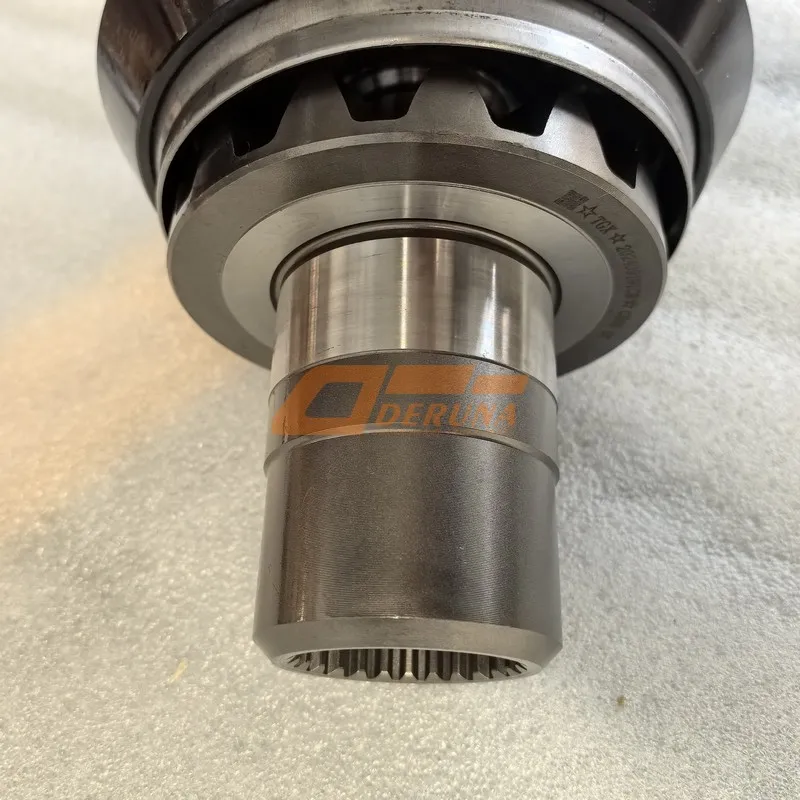
The howo differential is a mechanical marvel that allows the drive wheels to rotate at different speeds while still transmitting torque. In Sinotruk HOWO trucks, the differential is a critical component of the rear axle (or inter‑axle for tandem configurations).
Genuine HOWO differentials are manufactured from high‑strength alloy steel, with precision‑cut hypoid gears that run quietly and efficiently. The differential case houses the spider gears (or planetary gears in some models) that distribute torque between the two wheels. When a wheel loses traction, the differential naturally sends more torque to the wheel with resistance—a feature that must work flawlessly to prevent wheel spin and maintain vehicle control. A worn or aftermarket howo differential can lead to gear whine, poor traction, and even complete axle failure.
Beyond torque distribution, the howo truck differential also houses the differential lock mechanism (available on most heavy‑duty models). When engaged, the lock forces both wheels to turn at the same speed, providing maximum traction in mud, snow, or uneven terrain. Genuine differential locks are designed with heavy‑duty splines and robust engagement forks that withstand repeated use without seizing. Counterfeit units often use inferior materials that lead to lock failure when it is needed most. With HOWO trucks operating in some of the most challenging environments—from African mine sites to Siberian winter roads—the genuine differential has proven its ability to deliver reliable performance year after year.
The following table details the key specifications for the most common howo differential variants used across Sinotruk HOWO’s axle families. Matching the correct differential to the axle model is critical for proper gear mesh and longevity.
| Axle / Vehicle Model | Differential Type | Ring Gear Diameter (mm) | Ratio Range | Material | Lock Type | OEM Part Number Example |
|---|---|---|---|---|---|---|
| HOWO 6×4 / AC16 rear axle \\ | Inter‑axle differential), | 420 mm), | 4.42 – 5.73), | Forged steel, case‑hardened), | Pneumatic lock), | WG9925420010) |
| HOWO 8×4 / HC16 rear axle | Hypoid single reduction | 460 mm | 4.88 – 6.72 | Nickel‑chromium steel | Manual lock (spring loaded) | WG9725430025 |
| HOWO 4×2 / 7.5t front axle | Spiral bevel | 350 mm | 3.91 – 5.29 | Ductile iron housing | None (open) | AZ9718440050 |
| Sitrak C7H / MCY13 axle | Single reduction with inter‑axle diff | 470 mm | 3.08 – 4.63 | Advanced steel alloy | Electro‑pneumatic | 810W35606-0011 |
| HOWO heavy‑duty (mining) / AC26 | Planetary hub reduction + differential | 550 mm | 7.00 – 9.30 | High‑carbon steel | Pneumatic lock | WG9100360110 |
Heavy‑duty mining spec
Maximum torque multiplication
with genuine differentials
Every genuine howo differential is manufactured in ISO 16949 certified facilities with rigorous quality controls. The ring and pinion gears are cut on CNC gear hobbing machines, then case‑hardened to achieve a surface hardness of HRC 58‑62 with a core toughness that resists shock loads. After heat treatment, the gears are lapped together in matched sets to ensure perfect tooth contact and quiet operation. The differential case is machined from high‑strength cast iron or forged steel, with bores held to tolerances within 0.01 mm. Aftermarket differentials often skip the lapping step, leading to noise, premature wear, and reduced torque capacity.
Additionally, genuine howo differential assemblies are supplied with pre‑loaded bearings and precisely set pinion depth. The differential lock mechanism is tested for engagement under load, with splines that resist galling. Every unit undergoes a final spin test on a dynamometer to verify smooth operation and leak‑free seals. When you choose a genuine howo differential, you receive a component that has been validated on Sinotruk’s own test tracks for over 500,000 equivalent kilometers of simulated operation.
From the copper mines of Zambia to the oilfields of Saudi Arabia, the howo differential has earned a reputation for exceptional durability. In Nigeria, major logistics fleets report that genuine differentials routinely exceed 600,000 km before requiring overhaul, compared to aftermarket units that often fail within 150,000 km. In Russia, where extreme cold can cause lubricants to thicken, the genuine differential’s precise clearances and high‑quality bearings prevent seizure. Fleet data from Southeast Asia shows that the differential maintains consistent performance even after 800,000 km in high‑humidity, corrosive environments.
The global availability of genuine Sinotruk Howo Parts through distributors like Deruna ensures that the howo differential can be sourced quickly, minimizing downtime. Each differential is supplied with a complete installation kit, including new carrier bearings, pinion seal, and shims, ensuring a perfect rebuild.
Proper installation of the howo differential is critical for achieving its full service life. Always use a dial indicator to verify ring gear backlash (0.20‑0.30 mm) and pinion bearing preload. Apply marking compound to check tooth contact pattern; it should be centered on the tooth flank. Torque the carrier bearing caps to the specified value (typically 300‑350 Nm for heavy axles). Use only genuine seals and gaskets. After installation, fill with the recommended gear oil (GL‑5 85W‑140 for most applications) and check for leaks after a short test drive.
Regular maintenance extends differential life: change the gear oil every 60,000 km or annually in severe service. Inspect for metal particles on the drain plug. If the differential begins to whine or clunk, diagnose immediately—bearing preload or gear mesh may have changed. Workshops that follow these guidelines report that a genuine howo differential can last well beyond 800,000 km in normal highway service, and over 500,000 km in severe off‑road applications.
Sinotruk continues to innovate in drivetrain technology. Next‑generation HOWO axles will feature electronically controlled locking differentials that integrate with the vehicle’s ABS and traction control systems, offering seamless operation without driver intervention. New metallurgy with micro‑alloying is being developed to further increase gear life. For electric HOWO trucks, differentials are being optimized for high torque at zero speed, with special attention to lubrication at low speeds. Despite these advancements, the need for genuine howo differential components remains absolute—only OEM parts are validated for the specific axle geometry, torque loads, and lubrication requirements of each Sinotruk vehicle.
For environmentally conscious fleets, genuine howo differential units are available as part of Sinotruk’s remanufacturing program, where used cores are rebuilt with new bearings, seals, and precision‑ground gears. These units carry a 12‑month warranty and cost 30‑40% less than new, making them an ideal choice for budget‑conscious maintenance without sacrificing reliability.