- ADDRESS:Jinan City, Shandong Province
- Wanda Plaza, Jinan, Shandong, China
- +8617615809553
- info@deruna.com

The WEICHAI WP12 Oil-Gas Separator Group is a critical crankcase ventilation component engineered for the WP12 diesel engine platform. This complete assembly effectively removes oil mist from blow-by gases, returning condensed oil to the sump while venting clean gases to the intake system. Proper crankcase management is essential for engine health, and the WEICHAI WP12 Oil-Gas Separator Group provides fleet operators and technicians with a reliable solution for controlling oil consumption and reducing emissions. For genuine replacement parts and comprehensive engine service components, always source from verified WEICHAI Engine Parts to guarantee OEM fitment, consistent quality, and long-term reliability.
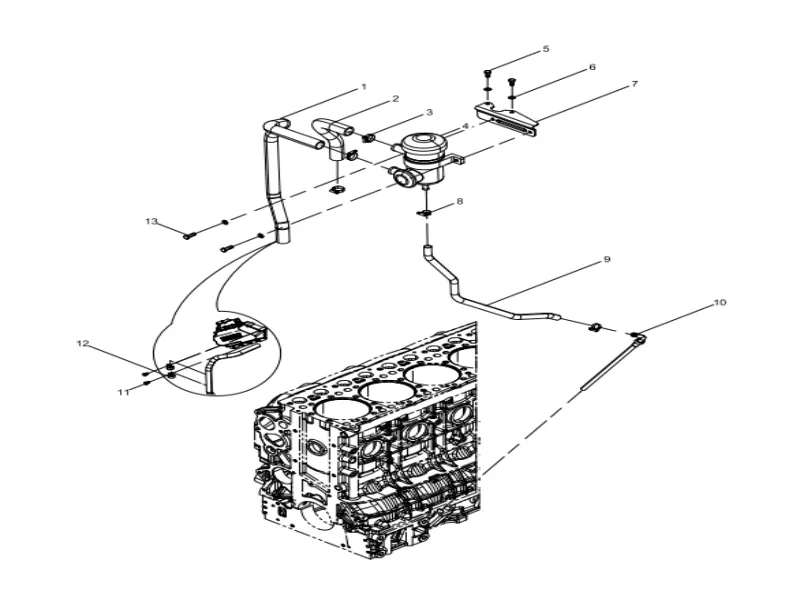
The WEICHAI WP12 Oil-Gas Separator Group is a dedicated crankcase ventilation system component that separates oil mist from blow-by gases generated during engine combustion. As combustion gases leak past the piston rings into the crankcase, they carry suspended oil particles. This assembly captures those oil droplets, allowing them to drain back into the oil pan while venting cleaned gases either to the intake system (closed crankcase ventilation) or to the atmosphere (open crankcase ventilation). For the WP12 engine, this separator is essential for maintaining proper crankcase pressure, preventing oil seal leaks, and reducing oil consumption.
The separator operates using a combination of impingement and centrifugal force principles. Blow-by gases enter the separator housing and pass through a series of baffles, mesh elements, or a rotating centrifugal drum. Oil particles impinge on these surfaces, coalesce into larger droplets, and drain back to the crankcase via a return line. Cleaned gases exit through the vent port. The WEICHAI WP12 Oil-Gas Separator Group typically includes the separator housing, filter element or centrifugal rotor, mounting bracket, connecting hoses, and oil drain tube with check valve to prevent reverse flow.
The WEICHAI WP12 Oil-Gas Separator Group is designed for the 11.596-liter inline-six WP12 engine used in heavy trucks (HOWO, SHACMAN, FOTON), construction machinery (loaders, excavators), marine propulsion, and stationary generator sets. The assembly is compatible with all WP12 variants from Euro III through Euro V emission standards, as well as China VI engines. The housing is manufactured from high-temperature-resistant plastic or aluminum alloy, with internal components engineered for continuous operation at crankcase temperatures up to 120°C.
The separator serves multiple critical functions: it prevents oil from being carried into the intake system where it would cause carbon buildup on valves and pistons, it reduces oil consumption by returning captured oil to the sump, it maintains proper crankcase vacuum to prevent seal leaks, and it reduces hydrocarbon emissions from the crankcase vent. For closed crankcase ventilation systems, the WEICHAI WP12 Oil-Gas Separator Group ensures that only clean gases are recirculated to the intake, protecting turbocharger compressor wheels and intercoolers from oil contamination.
In addition to the basic separator, the complete WEICHAI WP12 Oil-Gas Separator Group includes all necessary mounting hardware, gaskets, and hoses for installation. The oil drain line incorporates a one-way check valve that prevents crankcase pressure pulses from forcing oil backward through the separator. Replacement separator groups are available as complete assemblies or as individual components (filter element only, housing only, or hose kit). Genuine assemblies include a traceable part number and batch code for quality assurance.
Every genuine WEICHAI WP12 Oil-Gas Separator Group undergoes flow testing to verify separation efficiency and pressure drop characteristics. Counterfeit separators often use inferior filter media with poor coalescing properties, leading to oil carryover into the intake system. Excessive oil carryover can cause turbocharger compressor fouling, intercooler efficiency loss, and in severe cases, engine runaway due to oil ingestion. Always source from authorized distributors to ensure proper separation efficiency and engine protection.
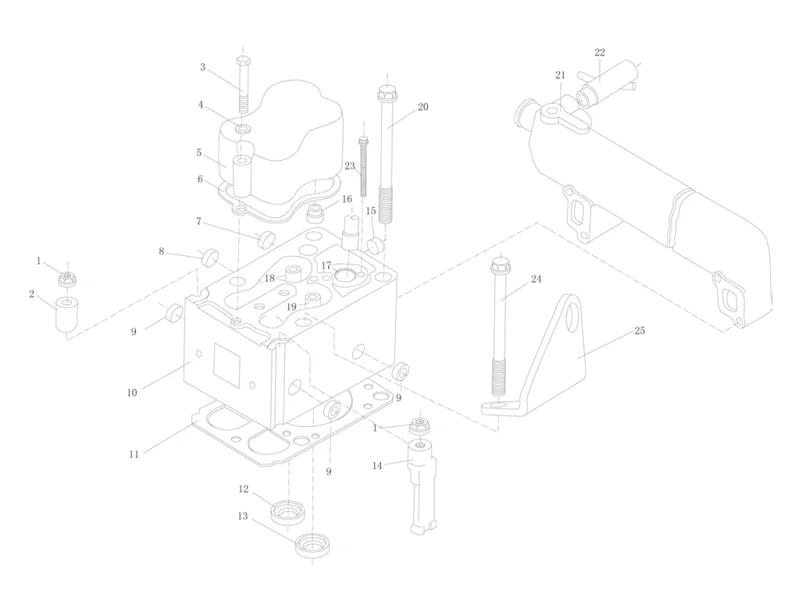
| NO. | Part NO | Description |
|---|---|---|
| 1 | 1003086550 | Oil-Gas Separator Assembly (Complete) – WP12.460E50 |
| 2 | 612630010267 | Oil-Gas Separator Component Assembly |
| 3 | 612600011439 | Oil-Gas Separator Component Set |
| 4 | 612630061000 | Oil-Gas Separator Connection Hose |
| 5 | 1000365412 | Oil-Gas Separator Mounting Bracket Assembly |
| 6 | 612630080205W | Oil-Gas Separator Filter Element (Service Part) |
| 7 | 1000422383 | Oil-Gas Separator Replacement Element |
| 8 | 612630010409 | Gas and Oil Separator Pipe (OEM 2216231-00044-001) |
| 9 | 612600010149 | Oil-Gas Separator Component – WP10/WP12 Industrial |
| 10 | 61800010112 | Oil Cooler Cover (Related Component) |
Our WEICHAI WP12 Oil-Gas Separator Group achieves over 95% separation efficiency for oil particles larger than 5 microns, preventing oil carryover into the intake system. This protects turbochargers, intercoolers, and combustion chambers from carbon buildup.
The separator maintains optimal crankcase vacuum, preventing oil seal leaks and reducing oil consumption. Correct crankcase pressure is essential for WP12 engine reliability and preventing gasket failures.
All components are rated for continuous operation at 120°C, with materials that resist degradation from hot blow-by gases. The oil drain line check valve prevents reverse flow during crankcase pressure spikes.
Pre-formed hoses and correctly positioned mounting brackets ensure direct bolt-on installation for WP12 engines in HOWO, SHACMAN, FOTON, and other Chinese heavy trucks. No modifications required.
We offer the WEICHAI WP12 Oil-Gas Separator Group as a complete kit including housing, filter element, mounting bracket, connecting hoses, and oil drain tube with check valve. Individual components also available.
We maintain substantial stock of WEICHAI WP12 Oil-Gas Separator Group components in warehouses across Asia, Europe, and the Americas. Express shipping options minimize downtime for fleet operators.
Unlike generic aftermarket separators that use inferior filter media with poor coalescing properties, our WEICHAI WP12 Oil-Gas Separator Group is manufactured to original equipment specifications. The separation media is optimized for WP12 blow-by flow rates and oil mist characteristics. A clogged or inefficient separator allows oil to enter the intake system, causing turbocharger compressor wheel deposits, intercooler efficiency loss, and in severe cases, engine runaway due to oil ingestion. Our separators prevent these costly failures.
Furthermore, our separators include a properly calibrated one-way check valve in the oil drain line. This valve prevents crankcase pressure pulses from forcing oil backward through the separator and into the intake. Many low-cost separators omit this valve or use inferior designs that fail, allowing oil to bypass the separator entirely. Our check valves are tested for 1 million cycles to ensure reliable operation.
Technical documentation included with the WEICHAI WP12 Oil-Gas Separator Group provides correct installation torque specifications (10-15 Nm for mounting bolts), hose routing diagrams, and a troubleshooting guide for common issues such as oil mist from the vent (clogged separator or failed check valve) and crankcase pressure problems (kinked drain hose or blocked vent port).
For large fleet customers, we offer sample evaluation: order one WEICHAI WP12 Oil-Gas Separator Group for trial installation. After validation, volume pricing applies. Many return customers report that our separators maintain separation efficiency for the full recommended service interval (200,000 km), compared to low-cost alternatives that clog or fail within 50,000 km.
Beyond the checklist above, pay attention to oil consumption trends. A sudden increase in oil consumption often indicates a clogged oil-gas separator or failed check valve. Before replacing turbochargers or performing major engine repairs, always inspect the WEICHAI WP12 Oil-Gas Separator Group. A faulty separator can mimic symptoms of worn piston rings or turbocharger seal failure.
For engines operating in dusty environments (mines, quarries, agricultural applications), consider shorter maintenance intervals. Dust ingestion accelerates blow-by and can clog separator elements more rapidly. Reduce element replacement intervals to 50,000 km for severe-duty applications. Also inspect the separator housing for external dust accumulation that could insulate the separator and cause overheating.
If the engine exhibits excessive oil mist from the crankcase vent (for open crankcase systems) or oil accumulation in the intake system (for closed crankcase systems), perform a simple separator function test. Disconnect the oil drain line at the crankcase end and cap it. Run the engine at idle and observe the drain line — oil should flow steadily but not excessively. No oil flow indicates a clogged separator. Excessive oil flow suggests piston ring blow-by exceeding separator capacity.
Finally, maintain a service log for the WEICHAI WP12 Oil-Gas Separator Group recording replacement dates, element change intervals, observed oil consumption, and crankcase pressure readings. This data helps predict when components are approaching end of life. For fleet operators, standardized replacement of separator elements every 100,000 km and complete separator assemblies every 400,000 km eliminates oil carryover issues and protects intake system components.
In summary, the WEICHAI WP12 Oil-Gas Separator Group is an essential component for any WP12 engine emissions and lubrication management program. Its efficient separation of oil from blow-by gases prevents carbon deposits on intake valves, turbocharger compressor wheels, and intercoolers. Whether you are performing routine maintenance on a HOWO dump truck, maintaining a fleet of SHACMAN tractors, or servicing a WP12 marine propulsion engine, using a genuine oil-gas separator group ensures that your intake system remains clean and your oil consumption remains within specification.
For workshops performing engine overhauls, we recommend ordering the WEICHAI WP12 Oil-Gas Separator Group together with a new oil filter, air filter, and fuel filters. The separator is often overlooked during routine service, but a clogged unit can cause excessive crankcase pressure, leading to oil seal and gasket failures. We provide installation guides with torque specifications, hose routing diagrams, and diagnostic procedures for all WP12 engine variants.
Our inventory includes both open and closed crankcase ventilation system configurations. For Euro III engines requiring open ventilation, we stock separators with atmospheric vent ports. For Euro IV, Euro V, and China VI engines requiring closed crankcase ventilation, we offer separators with recirculation ports that route cleaned gases to the intake system. Specify your application when ordering to receive the correct configuration.
We also provide after-sales documentation including material certificates and flow test reports upon request. Every WEICHAI WP12 Oil-Gas Separator Group is packaged in a foam-lined box to prevent damage during transit. Bulk orders receive custom export crating and documentation.
All specifications are based on original WEICHAI WP12 engine data. Actual product configurations may vary by sub-model (Euro III, Euro V, marine, construction, etc.). Always verify part numbers against your engine’s serial number plate before ordering.
Related Products
If you have any questions about our products, services, or anything related to what we offer, please don’t hesitate to leave us a message—our dedicated team is always ready to provide prompt and helpful responses to address your concerns. What’s more, when you become our valued customer, we’re delighted to offer you complimentary catalog services, giving you access to detailed, up-to-date information on our full range of products, specifications, and offerings to help you make informed decisions.